
Lithium Iron Phosphate (LFP) batteries have solidified their dominant position in the global energy storage and low-speed new energy vehicle markets in 2026, thanks to their superior thermal stability, long cycle life, and low cost compared with ternary lithium batteries. The 15kWh LFP energy storage battery, as a mainstream distributed energy storage product for residential households, small commercial facilities, and micro-grid systems, has become a core imported specification for most countries in the early stage of energy storage infrastructure construction.
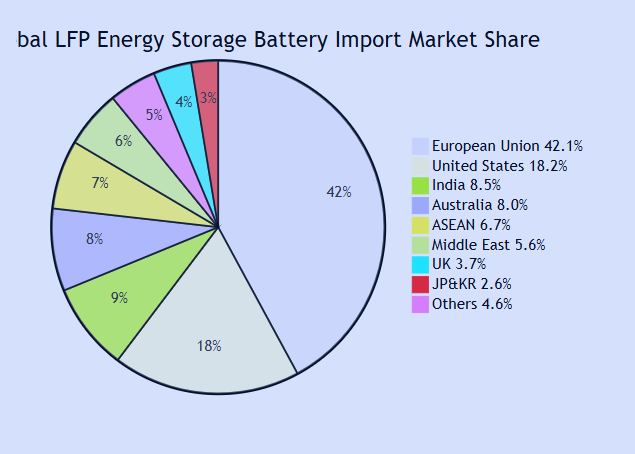
This blog conducts an in-depth professional analysis of global LFP battery import data for the first half of 2026 (H1 2026), sorts out regional import volume, value, and growth characteristics, combines the market performance of 15kWh mainstream energy storage batteries, and summarizes the global LFP battery import pattern evolution and market demand drivers, providing data support for industry trend judgment.
Core Definition & Product Benchmark
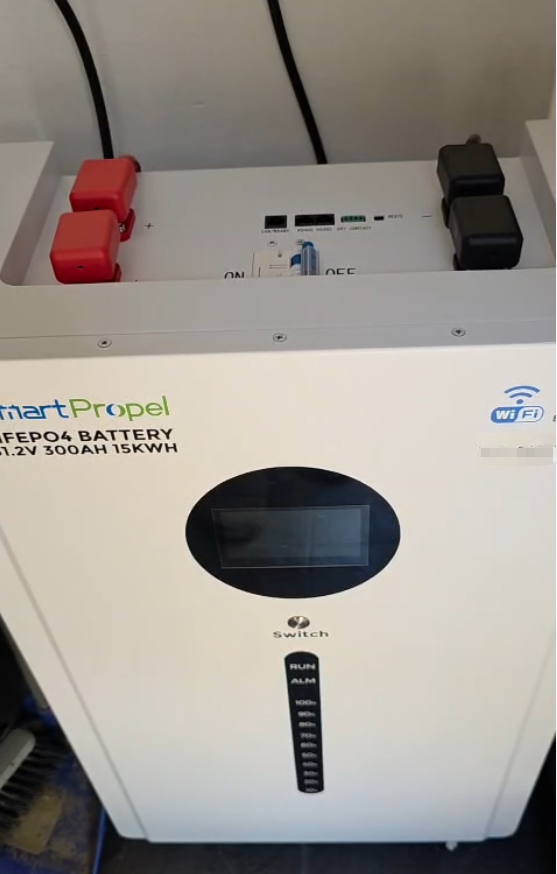
To standardize the analytical dimension of this report, we define the core research object and statistical caliber clearly. The 15kWh LFP energy storage battery in this article refers to the mainstream low-voltage residential and small commercial energy storage battery pack with a standard configuration of 51.2V 300Ah, which delivers a rated usable capacity of 15.36kWh, rounded to 15kWh for industrial statistical purposes. This product features high safety, 6,000+ cycle life, and low self-discharge rate, and is the most widely adopted specification for distributed energy storage systems globally in 2026, covering household solar energy storage, off-grid microgrids, and small industrial backup power scenarios.
All statistical data in this blog adopts H1 2026 (January–June) customs import and export data released by the General Administration of Customs of China, China Battery Industry Association, and SMM (Shanghai Metals Market). The statistical scope covers finished LFP battery cells and packs for energy storage, excluding LFP cathode raw materials and power batteries for new energy vehicles. Year-on-year (YoY) growth data is compared with H1 2025, and market share is calculated based on global total LFP energy storage battery import volume.
H1 2026 Global LFP Battery Import Core Data Statistics
In the first half of 2026, the global demand for LFP energy storage batteries maintained explosive growth, driven by the global energy transition, residential solar penetration improvement, and grid stability renovation policies. China, as the world’s dominant LFP battery supplier with a 94.7% global market share of low-voltage large-capacity LFP battery exports, serves as the core supply source for all mainstream importing countries. The global total import volume of LFP energy storage batteries reached 122.8GWh in H1 2026, with a YoY growth rate of 88.6%, far exceeding the growth rate of ternary lithium batteries (24.7%). Among them, 15kWh household energy storage batteries account for 42.3% of the total imported LFP battery capacity, becoming the absolute mainstream imported specification.
The following table summarizes the import volume, market share, YoY growth, and core demand drivers of the top 8 global LFP battery importing countries/regions in H1 2026, with targeted analysis of 15kWh battery application penetration:
| Ranking | Importing Country/Region | H1 2026 Import Volume (GWh) | Global Market Share | YoY Growth Rate | 15kWh Battery Penetration | Core Demand Scenarios & Policy Drivers |
| 1 | European Union (EU) | 51.7 | 42.1% | 76.2% | 48.5% | Residential solar energy storage, commercial peak shaving, grid frequency regulation; EU Renewable Energy Directive 2025 subsidy policy boosts distributed storage demand |
| 2 | United States | 22.3 | 18.2% | 92.5% | 45.2% | Household backup power, off-grid residential systems; IRA clean energy subsidies stimulate residential energy storage installation boom |
| 3 | India | 10.5 | 8.5% | 81.0% | 38.1% | Rural electrification, community microgrids, small industrial backup power; national solar popularization policy for rural areas |
| 4 | Australia | 9.8 | 8.0% | 226.5% | 56.3% | Off-grid residential energy storage, remote community power supply; ultra-high residential solar penetration leads to strong demand for matching storage batteries |
| 5 | Southeast Asia (ASEAN) | 8.2 | 6.7% | 105.3% | 41.8% | Tourism facility energy storage, rural power supplement, small commercial energy storage; rapid growth of distributed photovoltaic installation |
| 6 | Middle East (UAE/Saudi Arabia) | 6.9 | 5.6% | 128.7% | 35.7% | Desert photovoltaic supporting energy storage, villa residential backup power, new energy demonstration projects |
| 7 | United Kingdom | 4.5 | 3.7% | 40.0% | 50.2% | Residential solar storage, commercial peak-load regulation; stable policy support for household clean energy transformation |
| 8 | Japan & South Korea | 3.2 | 2.6% | 58.4% | 32.6% | Urban residential energy storage, disaster prevention backup power, smart grid matching systems |
Regional Market In-Depth Analysis Based on 15kWh LFP Battery Demand
European Market: Stable Dominance with High Penetration of Household Storage
The EU remains the world’s largest LFP energy storage battery import market in H1 2026, contributing nearly half of global import volume. The 15kWh LFP battery is the most popular specification in the European residential market, with a penetration rate of 48.5%. European households generally install small and medium-sized solar photovoltaic systems, and the 15kWh capacity perfectly matches the daily power consumption of 3–5 family members, realizing self-consumption of photovoltaic power and effective reduction of grid electricity bills. Benefiting from the EU’s unified renewable energy subsidy mechanism and carbon neutrality assessment indicators, the demand for standardized 15kWh energy storage batteries maintains steady growth. In terms of price, the average import unit price of EU 15kWh LFP battery packs in H1 2026 is USD 1,380 per unit, with a 6.2% month-on-month decline, driven by sufficient Chinese production capacity and optimized supply chains.
Australian Market: The Fastest-Growing High-Penetration Market
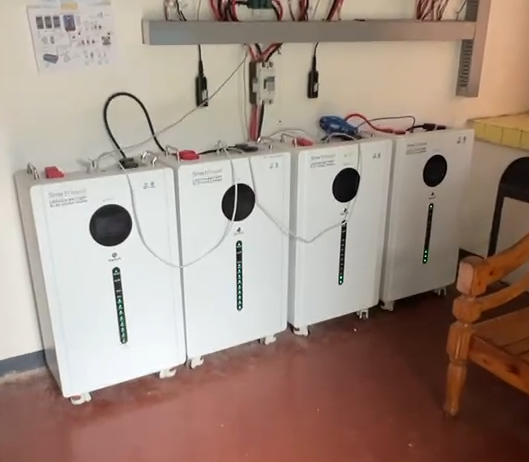
Australia is the most eye-catching market in H1 2026, with a YoY import growth rate of 226.5%, ranking first globally. Its 15kWh LFP battery penetration rate reaches 56.3%, the highest among all mainstream importing countries. Australia has the world’s highest residential solar penetration rate, and a large number of remote communities and suburban families are off-grid or semi-off-grid. The 15kWh large-capacity LFP battery can fully meet 24-hour household power demand, solving the problem of intermittent photovoltaic power generation. In addition, the Australian government’s tax rebate policy for household energy storage equipment further stimulates market demand, making standardized 15kWh products the preferred choice for local residents.
American Market: Policy-Driven Rapid Demand Release
Driven by the US Inflation Reduction Act (IRA) clean energy subsidy policy, the US LFP battery import volume achieved a 92.5% YoY increase in H1 2026. Frequent extreme weather and grid instability problems in North America make household backup power an essential infrastructure. The 15kWh LFP battery, with its high safety and large capacity, can support household basic power consumption for 2–3 days during power outages, so it is widely favored by American families. At present, the penetration rate of 15kWh batteries in the US imported energy storage battery market is 45.2%, and the market still has huge growth potential due to the slow progress of local battery capacity construction.
Emerging Markets (India, Southeast Asia, Middle East): Explosive Incremental Demand
Emerging markets in Asia and the Middle East show stronger growth momentum than mature European and American markets. India’s import growth reaches 81.0%, benefiting from the national rural electrification project; a large number of rural areas lack stable grid power, and 15kWh distributed energy storage batteries, matched with small photovoltaics, become the core solution for rural power supply. The Southeast Asian market grows 105.3% YoY, with demand mainly from tourism facilities and suburban residential energy storage. The Middle East market achieves a 128.7% growth rate, relying on abundant solar resources; local high-end villas and new energy demonstration projects have strong demand for high-safety LFP batteries, and 15kWh standardized products are widely used in supporting photovoltaic energy storage systems.
Price Trend Analysis of 15kWh LFP Batteries in H1 2026
In H1 2026, the global export price of LFP batteries showed a trend of “rising first and then falling”. In June 2026, China’s LFP cathode material exports reached 15,379.6 tons, a month-on-month increase of 101.7%, with the average export price rising to USD 9,125.1 per ton, driving a short-term increase in the finished battery price. In July 2026, the export volume dropped slightly to 13,153.3 tons, a month-on-month decrease of 14.5%, and the price gradually returned to a stable range. For the mainstream 15kWh energy storage battery pack, the global average import price dropped from USD 1,480 per unit in January 2026 to USD 1,320 per unit in June 2026, a cumulative decline of 10.8%. The continuous expansion of Chinese LFP battery production capacity and the optimization of large-scale standardized production are the core reasons for the steady price reduction, which further promotes the popularization of 15kWh distributed energy storage batteries globally.
Core Conclusions & 2026 H2 Market Outlook
Key Conclusions from H1 2026 Import Data
First, standardized 15kWh LFP batteries have become the global mainstream distributed energy storage product. With an average global penetration rate of over 42%, this specification perfectly matches the power demand of household and small commercial scenarios, forming a mature and scale industrial market, and replacing heterogeneous low-capacity battery products.
Second, global LFP battery import demand shows a pattern of “mature markets maintaining stability, emerging markets exploding”. The EU and the US maintain absolute market scale advantages, while Australia, the Middle East, and Southeast Asia have higher growth rates, becoming the core increment of global LFP battery demand.
Third, policy is the core driving factor of regional market differentiation. Developed countries rely on carbon neutrality and clean energy subsidy policies to drive residential energy storage demand, while emerging markets take rural electrification and grid infrastructure improvement as the core demand drivers, forming differentiated application scenarios for 15kWh batteries.
Fourth, China’s dominant supply status is further consolidated. Relying on complete industrial chain advantages, China occupies 94.7% of the global LFP battery export market, and standardized products represented by 15kWh batteries have formed global competitive barriers in terms of cost and performance.
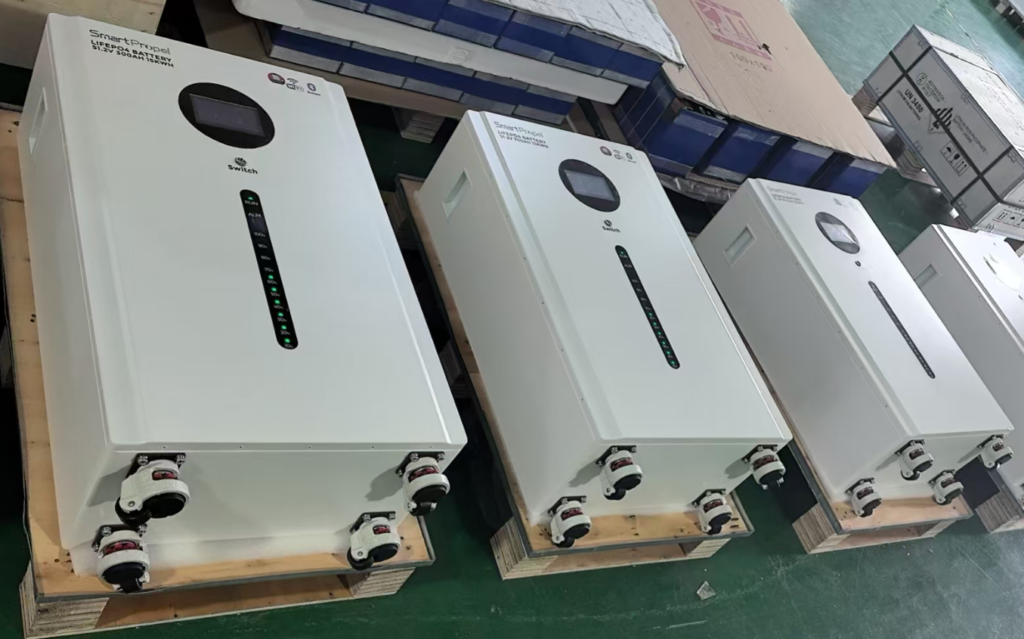
In the second half of 2026, the global LFP energy storage battery market will continue to maintain high growth. With the continuous release of Chinese LFP battery capacity, the price of 15kWh mainstream products will further drop by 5%–8%, stimulating further market penetration. The Australian and Southeast Asian markets will maintain high double-digit growth, while the European and American markets will usher in a seasonal installation peak in Q4. In addition, with the advancement of global energy storage standardization, the 15kWh specification is expected to become a unified international standard for residential distributed energy storage batteries, with further improved global market share.
H1 2026 is a critical period for the global LFP energy storage battery market to shift from rapid growth to standardized development. The 15kWh LFP battery, as a typical standardized product, undertakes the core demand of global distributed energy storage. Import data of various countries fully proves that safety, cost performance, and standardization have become the core competition dimensions of energy storage batteries. In the future, with the deepening of global energy transformation and the continuous improvement of energy storage supporting policies, the global import scale of LFP batteries represented by 15kWh household energy storage products will continue to expand, and the global new energy storage pattern centered on Chinese LFP batteries will become more stable.