
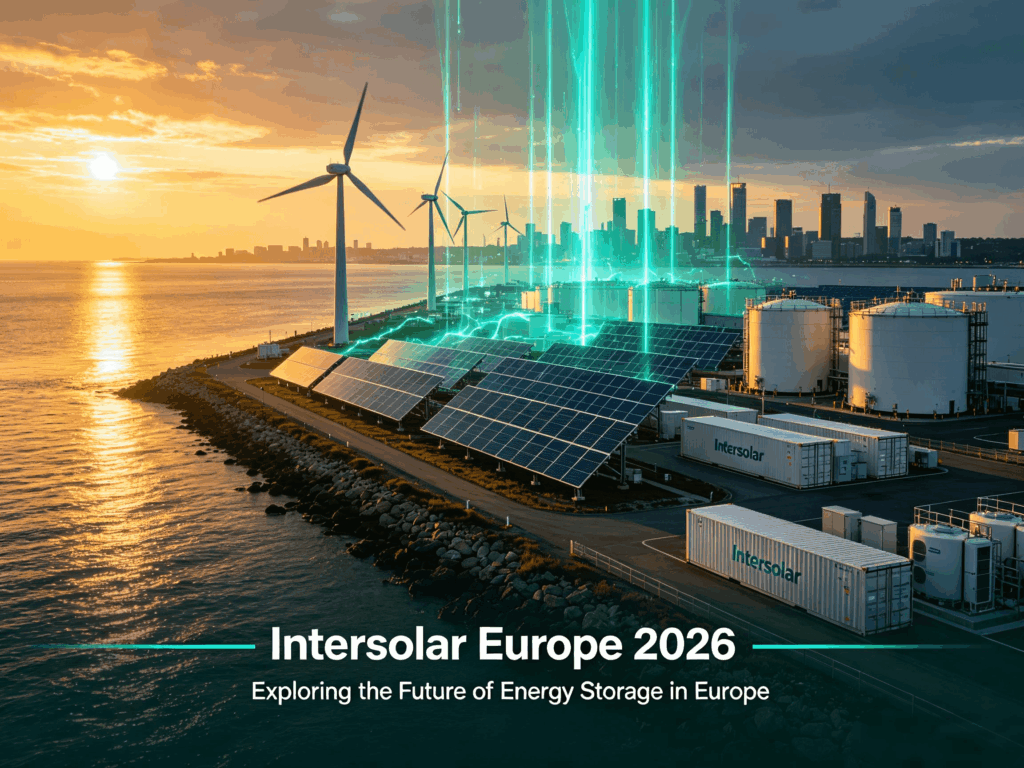
Residential Storage Evolution
-
All-in-one stackable energy storage batteries dominate with plug-and-play simplified installation
-
Balcony mini-storage evolves into mainstream consumer home appliances
-
Standalone batteries upgrade to full home energy ecosystems
-
Residential energy storage system use cases expand to small commercial & industrial scenarios
Core C&I Storage Market Demands
-
Low penetration yet high growth; five core needs: EU certification, integration, expandability, revenue maximization, O&M
-
AI energy management + 15-min power price arbitrage as standard configuration
-
Competition shifts from hardware specs to complete integrated solution capacity
High-Growth Emerging Storage Segments
-
Sodium-ion storage enters commercial operation with live European projects
-
GWh-scale utility storage: +25% energy density, over 20% less land usage
-
1MW+ grid-forming storage becomes mandatory EU grid requirement
-
AIDC data center storage forms a brand-new growth vertical
-
European Market Compliance Barriers
-
EU Battery Passport enforced with strict full-lifecycle carbon footprint tracking
-
PCS vendors from high-risk regions face public fund procurement limits
-
Localized supply chains and data security compliance are mandatory entry thresholds
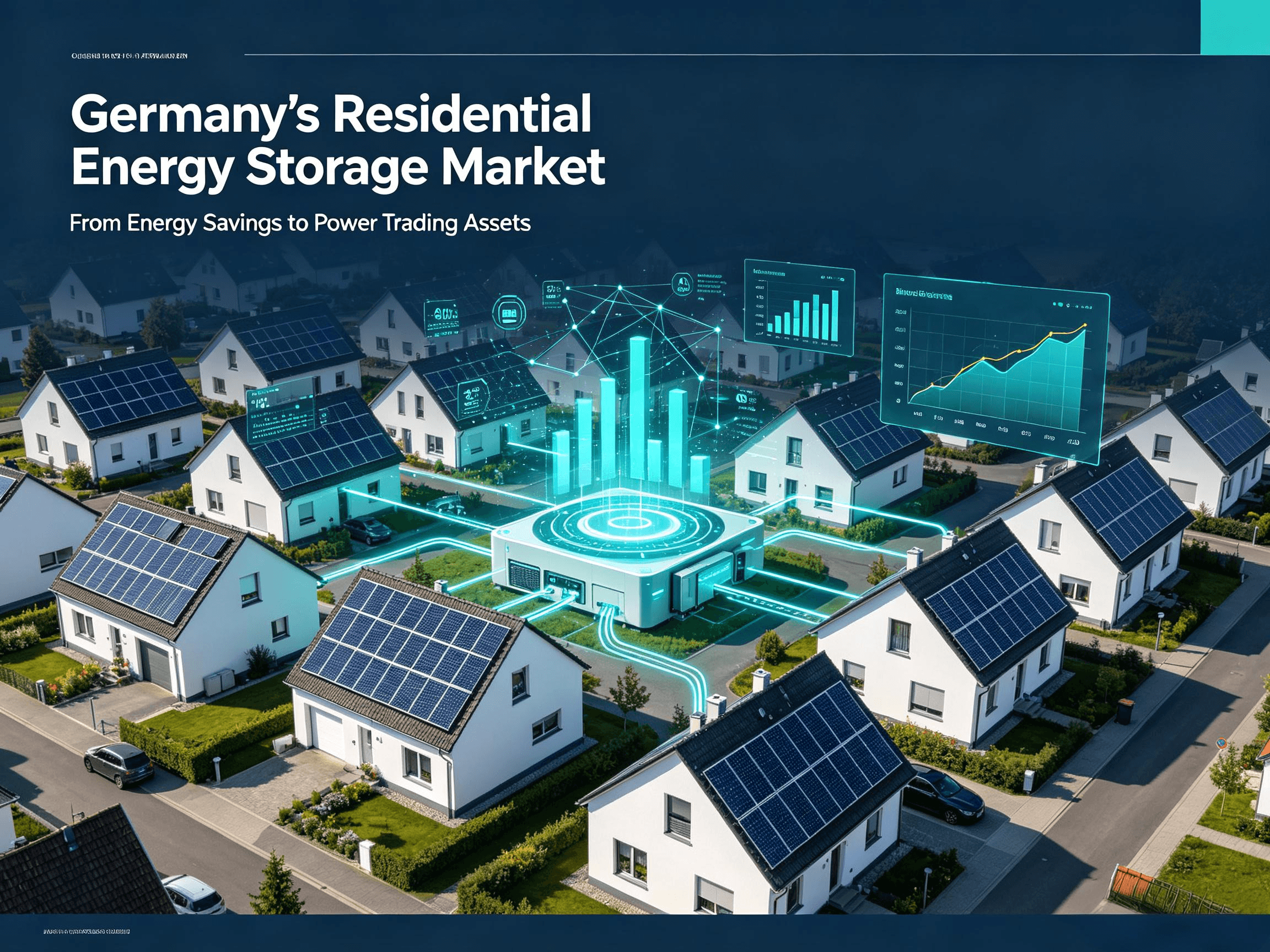
Germany’s Residential Energy Storage Market: From Energy Savings to Power Trading Assets
Market Transformation
Germany’s residential energy storage market is evolving from a household electricity-saving solution into a distributed energy asset capable of participating in dynamic electricity price arbitrage and Virtual Power Plant (VPP) aggregation.
When solar and wind generation exceeds electricity demand, wholesale electricity prices can turn negative, meaning generators effectively pay the market to absorb excess power. In April 2026, Germany experienced multiple significant negative electricity price periods, creating new revenue opportunities for residential battery systems.
Four Layers of Value in Residential Energy Storage
Residential energy storage is evolving from an electricity cost-saving tool to a power system asset. Intelligent EMS automatically optimizes electricity prices, household loads, solar generation, and battery status—without manual intervention.
Maximize Self-Consumption: Store excess solar energy during the day and use it at night to reduce grid electricity consumption.
Dynamic Electricity Price Arbitrage: Charge during low or negative-price periods and discharge when prices are high, turning electricity price fluctuations into revenue.
VPP Aggregation Revenue: Aggregate residential battery systems to participate in electricity markets and grid flexibility services.
Distribution Grid Value: Reduce distribution network congestion, shave peak demand, and improve local renewable energy utilization.
Upgrading Global Market Competitiveness
EMS / HEMS: Automatically optimize charging and discharging strategies based on PV generation, household loads, and dynamic electricity prices.
VPP Integration: Support standardized communication protocols, remote monitoring, dispatch response, and cybersecurity.
Localized Services: Provide localized technical support, after-sales service, and compliance with regional market requirements.
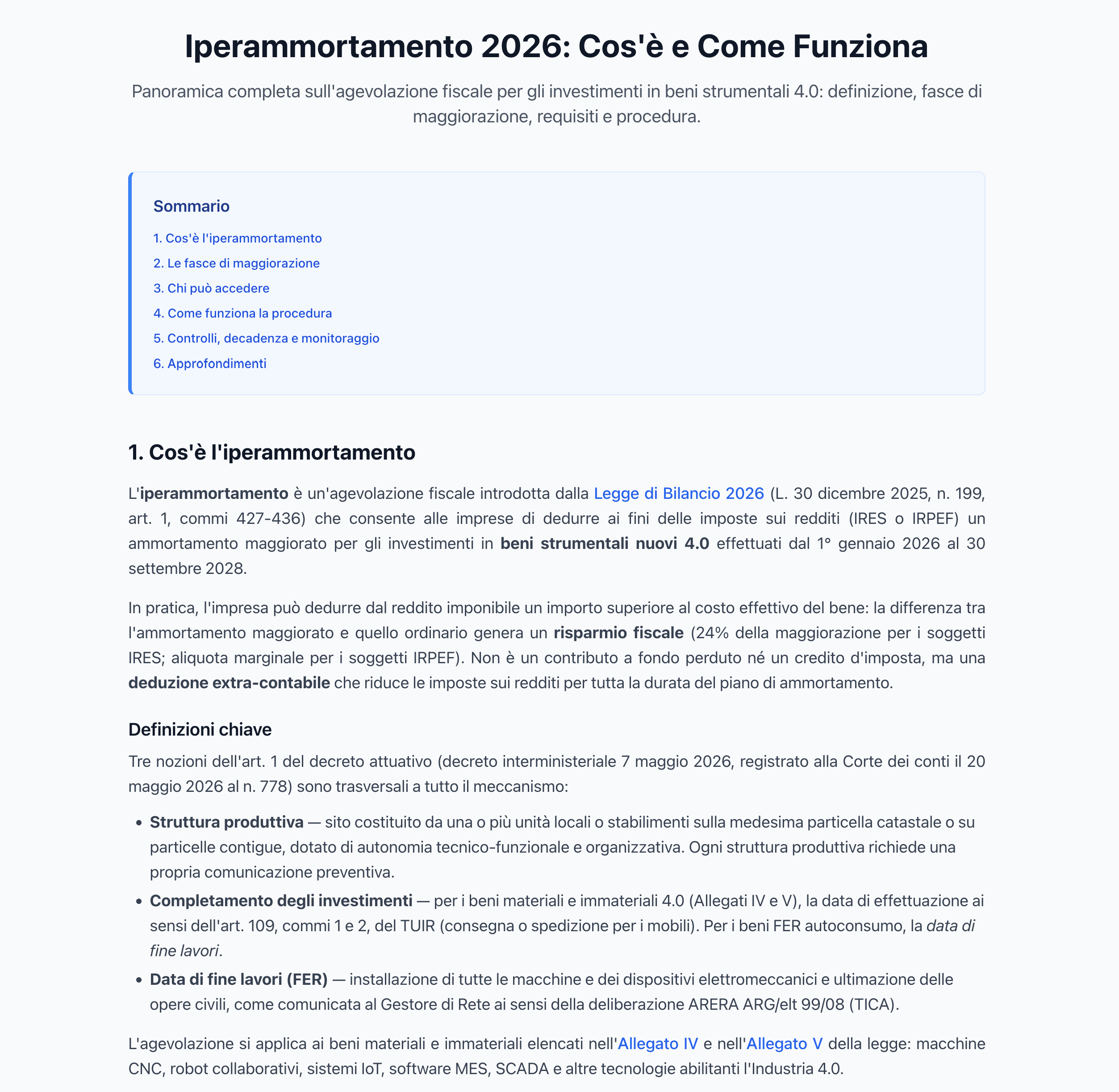
Italy’s Energy Storage Policy Boost: Accelerated Depreciation Drives BESS Growth
Accelerated Depreciation Eligibility for BESS
Battery Energy Storage Systems (BESS) are included in the super depreciation incentive scope. Enterprises can raise the deductible cost base for their investments, which greatly optimizes project cash flow and shortens capital payback cycles. Some projects with previously lengthy payback periods regain economic viability.
No Tax Incentives for SaaS Solutions
Subscription-based SaaS software is excluded from the depreciation benefit. The business model of low-cost hardware plus annual software subscription fees faces operational headwinds. Recommended strategy: package on-premise EMS and edge controllers with hardware as a capitalizable asset bundle, while pricing SaaS offerings separately.
Overseas Market Opportunity: Integrated System Solutions
European buyers favor solution providers capable of delivering full financial profitability analysis, rather than standalone equipment quotations. Suppliers need to deliver holistic project packages integrating PV capacity planning, BESS design, EMS operation strategies, and tax compliance documentation to demonstrate complete project economics.
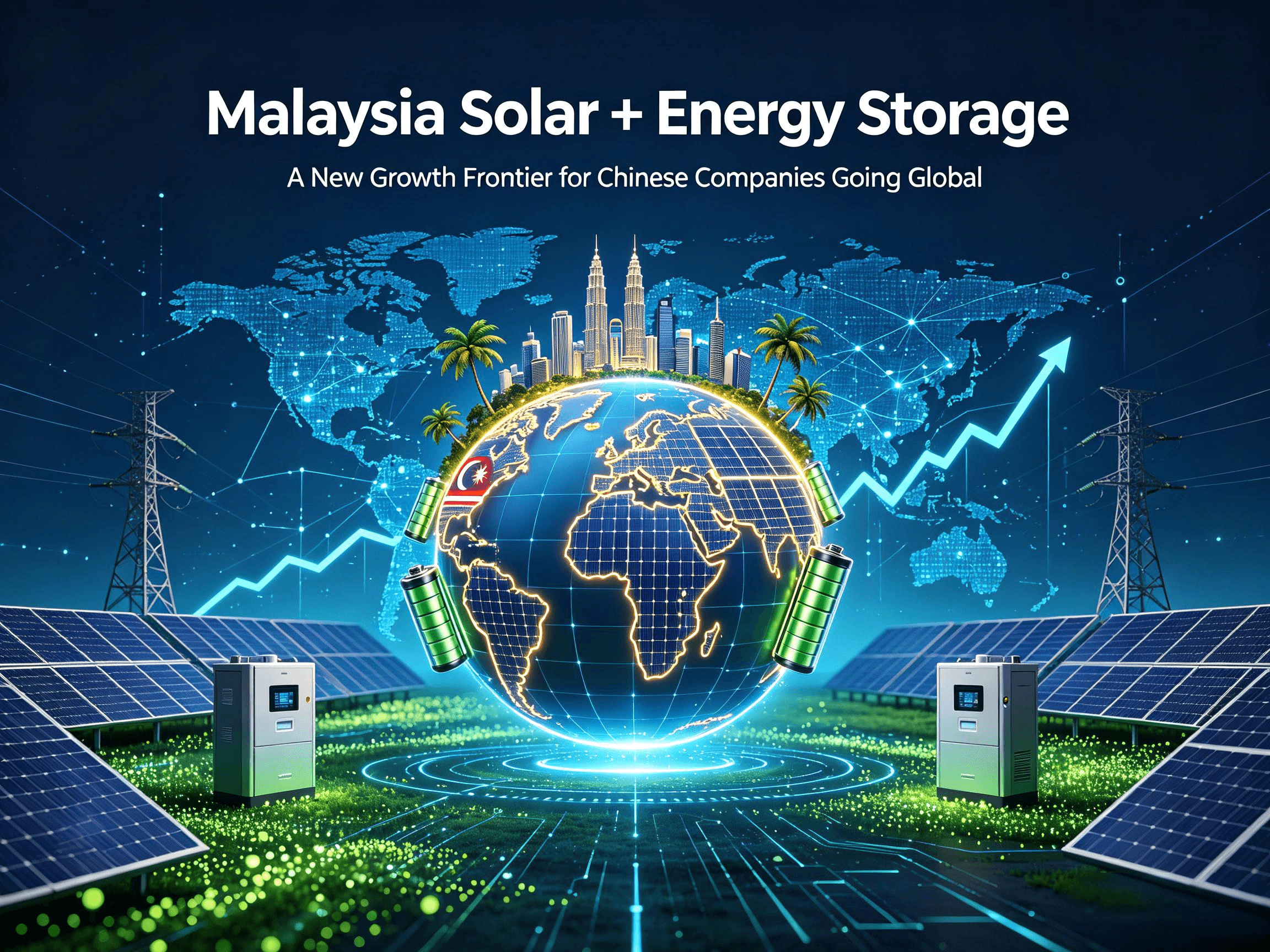
Malaysia Solar + Energy Storage: A New Growth Frontier for Chinese Companies Going Global
Three Core Policy Drivers Shaping Malaysia’s 2026 Renewable & Storage Market
Mandatory BESS Requirement Under LSS6
-
The 2GW LSS6 solar tender launched in 2026 enforces mandatory Battery Energy Storage System (BESS) integration for the first time.
-
It unlocks RM6–8 billion worth of EPCC contracting opportunities, opening market access for Chinese energy storage suppliers.
-
The shortlist for MyBeST’s first batch of standalone storage projects (400MW / 1600MWh) has been officially released.
Carbon Tax Accelerates Renewable Transition
-
Carbon tax, covered in the 2026 national budget, targets steel and energy industries.
-
The carbon tax rate is projected at RM15 per tonne of CO₂, pushing up conventional grid electricity tariffs.
-
The CRESS scheme enables corporates to sign direct power purchase agreements with renewable energy developers.
GITA & Solar ATAP Tax Incentives
-
Green hydrogen projects qualify for 100% investment tax allowance; renewable power assets enjoy a 70% tax allowance.
-
Solar ATAP replaces the former NEM 3.0 scheme, allowing commercial & industrial solar installations up to 100% of on-site power demand.
-
The contract term lasts 10 years, positioning Malaysia as one of Southeast Asia’s most tax-friendly markets for green energy investment.
Four Business Tracks for Overseas Expansion in Malaysia’s Green Energy Sector
PV Modules & System Integration
-
Business targets: Large-scale LSS5 & LSS6 projects, plus commercial and industrial rooftop distributed solar (capacity surpassed 500MW in 2025).
-
Compliance: Obtain SEDA certification. Malaysia stands as the world’s third-largest PV module exporter.
Energy Storage Batteries & Supporting Systems
-
Application scenarios: MyBeST standalone storage, BESS mandatory pairing for LSS6 solar farms, and data center energy storage (60% annual growth rate).
-
Channel access: Cooperate with TNB national power procurement system. EVE Energy’s Malaysia manufacturing plant is operational.
Battery Material Supply Chain Export
-
Export portfolio: Cathode, anode, separator, electrolyte and other battery auxiliary materials.
-
Market driver: CATL, EVE Energy and Gotion High-Tech have launched local factories in Malaysia, fuelling sustained rising demand for upstream raw materials.
EPC General Contracting & Localized Operation
-
Core business: General EPC contracting for utility-scale solar plants; Risen Energy has secured a 1.2GW project.
-
Market entry requirements: Establish local procurement networks and apply for official certifications from SEDA and MIDA.
Bangladesh’s Major Solar Policy Shift: Import Tariffs Fully Removed for PV Equipment
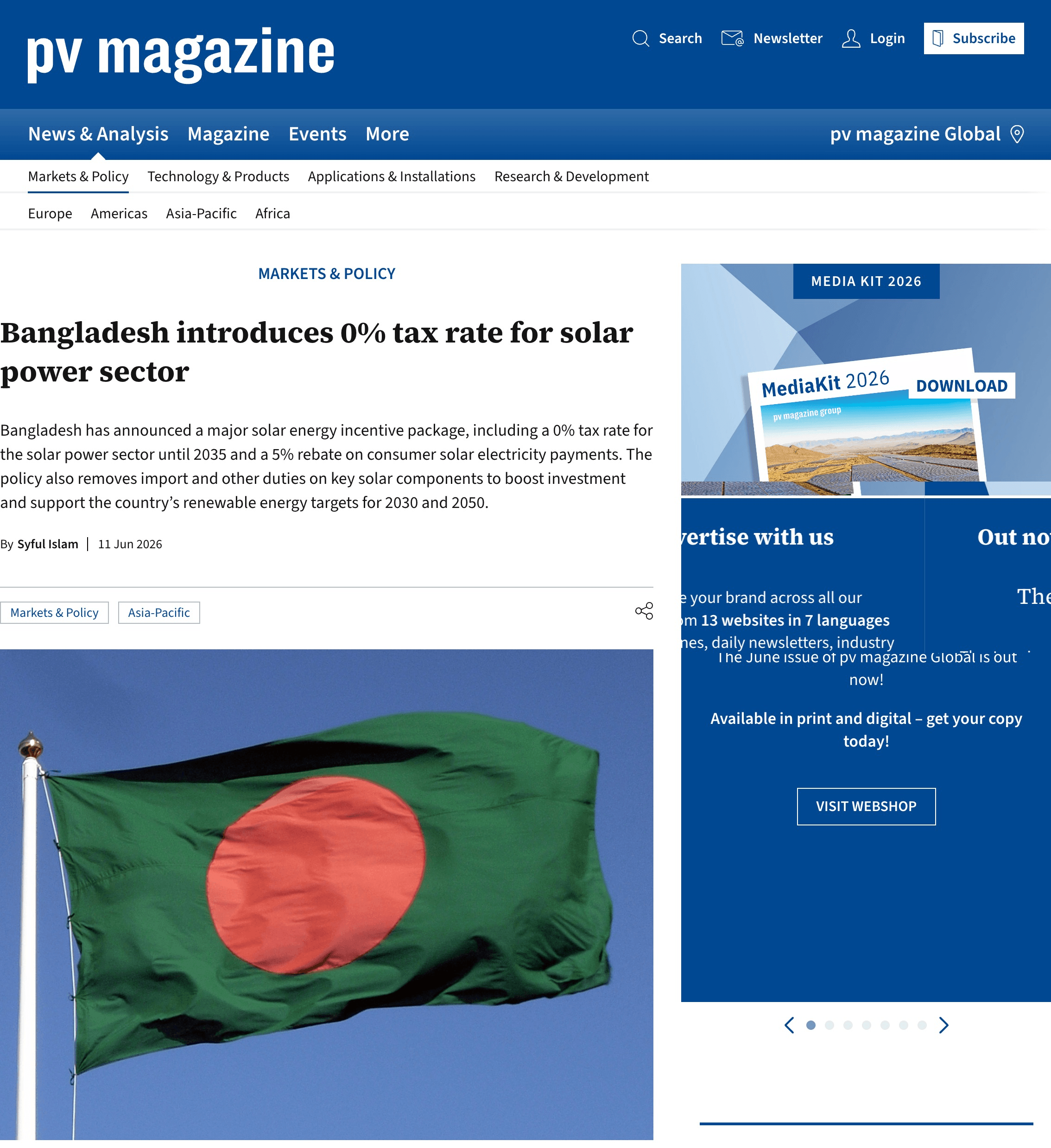
Landmark PV Policy in Bangladesh: All Import Tariffs Slashed from 27.5% to Zero
-
Import Duties, Regulatory Taxes, Supplementary Taxes, and Advance Taxes Reduced to Zero
-
Coverage includes: solar modules, inverters, mounting systems, lithium batteries, energy storage systems, BMS, and PV cables.
-
The policy is effective until June 2031, with 0% corporate income tax incentives available for eligible enterprises until 2035.
Massive 20GW+ Installation Gap
-
Current total renewable installed capacity: merely 1.5GW (PV only 150.4MW)
-
National target: 20% power supply from renewables by 2030, with total planned capacity lifted to 35GW
-
170 million population + annual GDP growth above 6% generates robust power demand
-
10-Year Golden Window for Overseas Players
-
Equipment Export: Full tariff exemption drastically cuts costs of modules, inverters and energy storage systems.
-
Local Production Outbound: Preferential incentives and support schemes for domestic manufacturing.
-
Integrated PV & Storage: Lithium batteries, BESS and BMS enjoy zero tax till 2030.
-
Transit Export Edge: Products manufactured locally qualify for tariff concessions when exported to Europe and the US.